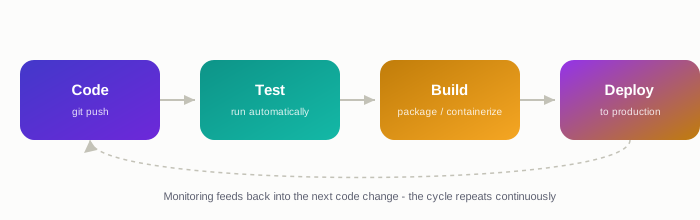
CI/CD (Continuous Integration / Continuous Deployment) automates testing and deploying your code every time you push changes - instead of manually running tests and uploading files yourself.
What CI actually does
Continuous Integration means every push automatically triggers your test suite on a clean server, catching bugs before they reach anyone else - not relying on "it worked on my machine."
A basic GitHub Actions pipeline
# .github/workflows/test.yml
name: Run Tests

on: [push]

jobs:
  test:
    runs-on: ubuntu-latest
    steps:
      - uses: actions/checkout@v4
      - name: Set up Node
        uses: actions/setup-node@v4
        with:
          node-version: '20'
      - name: Install dependencies
        run: npm install
      - name: Run tests
        run: npm test
This file, committed to .github/workflows/, tells GitHub to check out your code, install dependencies, and run your tests automatically on every push - no manual steps.
Adding deployment (CD)
  deploy:
    needs: test
    runs-on: ubuntu-latest
    if: github.ref == 'refs/heads/main'
    steps:
      - name: Deploy to server
        run: echo "Deployment step would go here"
needs: test ensures deployment only runs if tests pass first - a broken build should never reach production. The if condition restricts deployment to the main branch only, not every feature branch.
Why this matters even for small projects
A pipeline that runs your tests automatically catches mistakes before a user does, and removes the temptation to skip testing "just this once" under time pressure - the automation happens regardless of how rushed you are.